

Part of the Catskill Seller’s Guide — a resource for owners thinking about what comes next.
Previous: The Catskills Vacation Property Market — What Sellers Need to Know
Next in the series
Pricing Your Catskills Vacation Property
Pricing a Catskills vacation home is very different from pricing your primary residence.
Here’s why it’s more nuanced here in the mountains—and how to position your property correctly from day one.
What’s Actually Complicated
Of all the decisions you’ll make when selling your Catskills property, pricing is the one that defines your outcome—and the one most likely to misfire without informed, local guidance. Price too high and your listing lingers, signaling “overpriced” to savvy buyers instead of inviting strong offers. Price too low and you not only trigger the “What’s wrong with this house?” reaction, you risk leaving significant equity behind. Getting it right from day one takes more than a quick look at recent sales. It demands a clear understanding of what makes Catskills vacation property values uniquely—and genuinely—complex.
The Comparable Sales Problem
In a dense suburban market, pricing a home is relatively straightforward. There are enough similar properties trading often enough that the numbers tell a fairly clean story. The Catskills market plays by different rules.
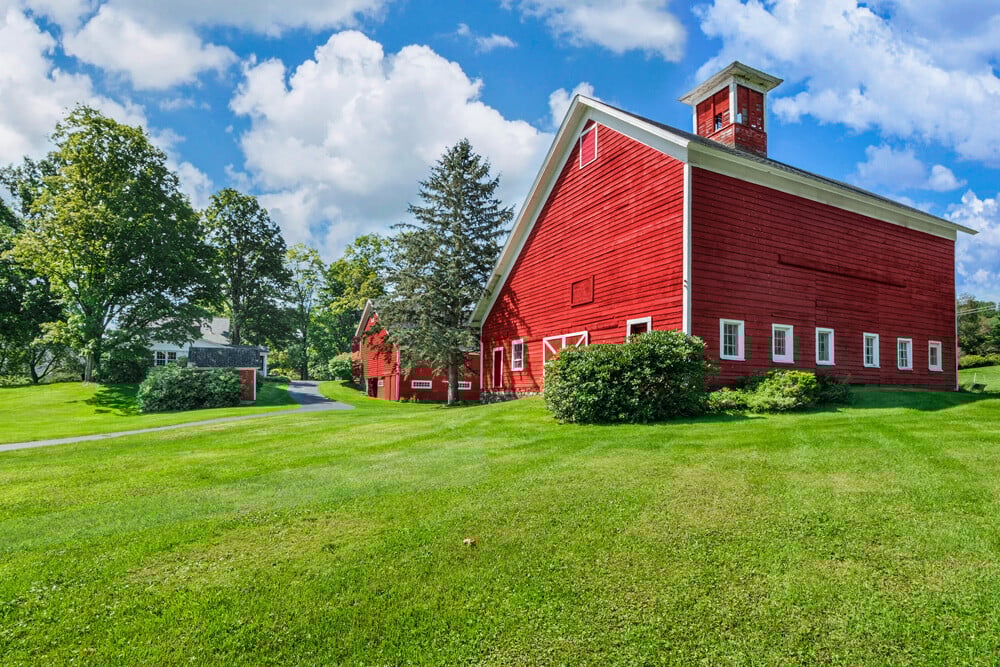
In many of our submarkets—particularly in Delaware, Schoharie, Otsego, and the western reaches of Ulster and Greene counties—true comparable sales are scarce. You might see only a handful of relevant transactions in a twelve‑month period, and no two properties are genuinely alike. A log home on 40 acres with a trout stream doesn’t have a neat, one‑to‑one comp. Neither does a restored Victorian anchoring a small hamlet.
Here, pricing is as much informed judgment as it is hard data. It calls for a practitioner who knows the market intimately—not just the spreadsheets, but the story behind them: what today’s buyers are actually responding to, what’s been sitting and why, and what’s moved quickly and commanded a premium.
How Short-Term Rental Income Affects Value
If your property has operated as a short‑term rental—on Airbnb, VRBO, or similar platforms—that income history is absolutely relevant to value, and it’s more nuanced than a simple “X dollars per year.”
For some buyers, documented STR income is a major advantage. It turns the home from a purely lifestyle purchase into an asset with a measurable return, which can widen your buyer pool and justify more aggressive pricing. For others—especially buyers seeking a personal retreat with no guest turnover—STR history may be neutral at best, or even a drawback if it suggests heavy use.
So how that income story is packaged, and which buyers see it, matters. Just as important: what’s actually allowed. STR regulations vary widely across Catskills towns and hamlets; what’s permissible in one municipality may be capped, restricted, or prohibited in the next. Buyers will do their homework. You want to be ahead of their questions with clear, accurate answers.
There’s another layer: short‑term rental income is typically not weighted in a traditional appraisal the way long‑term lease income is. That disconnect between what a buyer is willing to pay for an income‑producing getaway and what a bank’s appraiser will assign as value can create friction when conventional financing is involved—something to understand and plan for before you set your price.
The Gap Between Expectation and Market Reality
This is the conversation no seller looks forward to—and the one a straightforward agent has to be willing to start.
From 2020 through early 2022, the Catskills market ran unusually hot. Homes that once would have taken months to place went under contract in days, often with multiple offers and prices pushed over asking. That window of time understandably shaped many owners’ expectations about what their property “should” be worth—expectations today’s market doesn’t always validate.
When it comes to pricing, clear-eyed truth matters. Our role is to give you an accurate, data‑driven view of where your property sits right now—not where it sat three years ago, and not where anyone wishes it would land. That candor isn’t a penalty; it’s a strategic advantage.
A home priced correctly from the outset tends to sell faster, generates healthier competition, and typically nets more than one that starts high and chases the market down from an aspirational list price.
What Lifestyle Attributes Are Actually Worth
In Catskills vacation property, the elements that truly move buyers often aren’t the ones an appraiser can plug neatly into a form. A long mountain view. A trout stream threading through the back acreage. A swim‑worthy pond. A barn with original timbers. Proximity to Belleayre or Plattekill. A location where you can stroll to a village for dinner and the Saturday farmers’ market.
These attributes carry real, tangible value—but capturing that value requires local knowledge and insight into buyer behavior, not just a cost‑per‑square‑foot calculation. (In fact, price per square foot is not a metric we lean on in the Catskills. Ask us why when we meet.) A key part of our pricing process is identifying which of your property’s distinctive features resonate most with the specific buyer segment you want to attract, and then reflecting those strengths in the price without stretching beyond what the market will bear.
Acreage is another variable that demands nuance. More land does not automatically equal proportionally more value; beyond a certain point, additional acres in a given area may contribute only modestly to the final sale price. Understanding where those inflection points lie in your particular submarket is essential to pricing accurately—and that’s where targeted, Catskills‑specific expertise matters.

What a Strong Pricing Strategy Actually Looks Like
We begin every seller engagement with a true market analysis—not a Zestimate, not a back-of-the-napkin “ballpark,” but a grounded review of recent comparable sales, your current competition, days-on-market trends, and the specific strengths and quirks of your property. We bring you a clear recommendation with the logic behind it, and we walk you through the tradeoffs of different pricing strategies so you can decide with confidence.
From there, pricing is not a “set it and forget it” exercise. We track the market and your listing’s performance in real time—web and portal analytics, showing volume, quality of inquiries, and agent and buyer feedback—and we reach out proactively if an adjustment makes sense. You’re never left guessing how your listing is actually doing.
The objective stays the same: a price that creates momentum from day one, attracts serious, qualified buyers, and positions you to negotiate from strength—not from fatigue or frustration.
Part of the Catskill Seller’s Guide — a resource for owners thinking about what comes next.
Previous: The Catskills Vacation Property Market — What Sellers Need to Know
Next in the series: Catskills Seller Disclosures — What You Need to Know Before You List
Ready to Know Where You Stand?
A free, no-obligation home valuation is the best first step. We’ll give you an honest, detailed picture of your property’s position in today’s Catskills market — and a clear sense of what a well-executed sale could look like.